
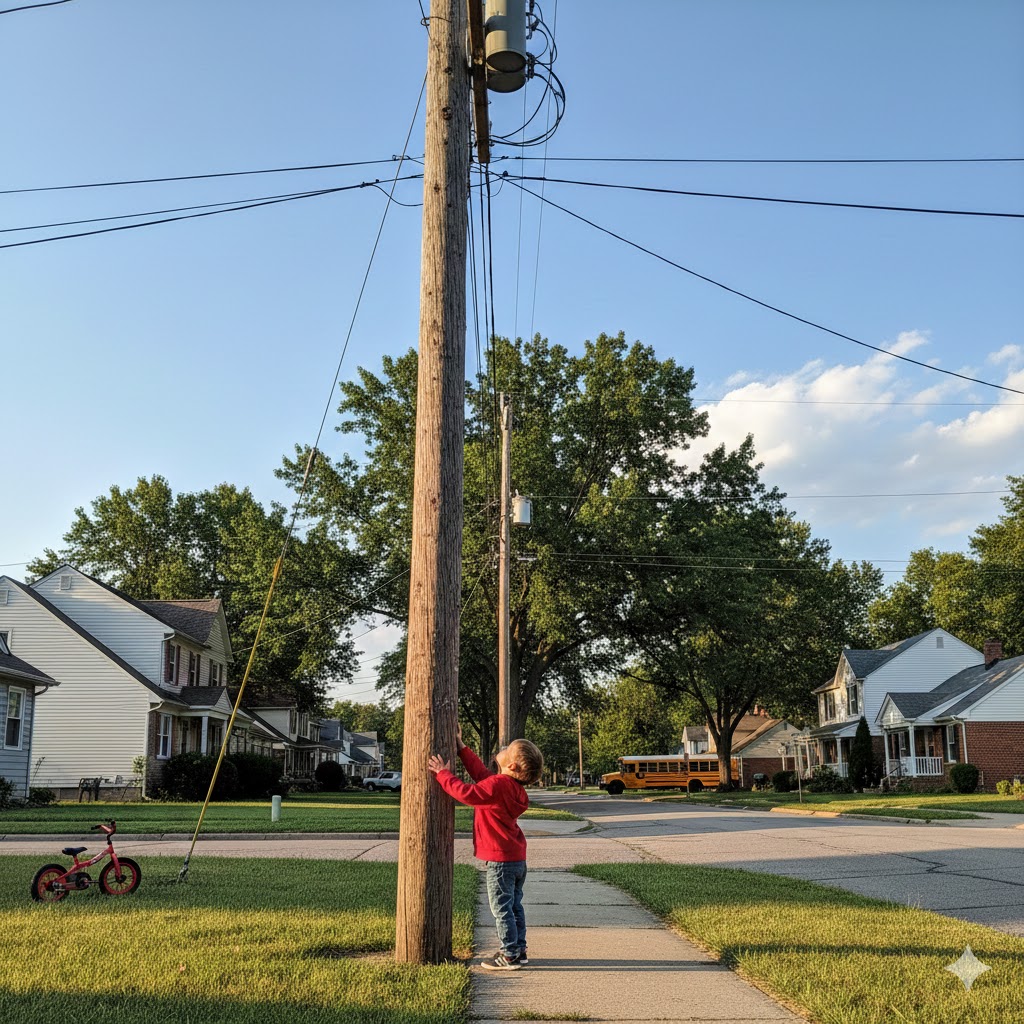
You see these poles everywhere. On sidewalks, in backyards, behind strip malls, next to schools. Most of us walk right past them without thinking twice, until something happens.
A storm knocks one over, a car hits one, or you notice wires hanging lower than usual.
This article is going to break it all down in plain English. No stiff textbook vibe. Just the real-world answers you would want if you were standing next to a utility pole wondering whether you should back up or not.
What Exactly Is a Utility Pole?
A utility pole is basically a vertical support structure that holds up overhead wires. Those wires can be carrying electricity, internet, phone service, cable TV, or sometimes all of the above at once.
In the U.S., most utility poles are made of wood, usually treated pine or cedar, but you will also see concrete, steel, and composite poles in some areas.
The height of a typical utility pole ranges from about 30 feet to over 90 feet depending on what it is supporting and where it is located. Residential neighborhoods usually have shorter poles, while highways and major transmission routes use taller ones.
What matters for the touching question is this: the pole itself is usually not energized, meaning electricity does not normally flow through the wood or concrete. The danger comes from the equipment and wires attached to it.
Can You Touch a Utility Pole Safely?
Short answer: yes, most of the time you can touch the pole itself without getting shocked. People lean on them, kids bump into them, and lineworkers climb them every day.
The pole material is designed to be non-conductive or at least resistant to electricity.
But here is the catch. Just because you can touch one does not mean you should touch one in every situation.
Utility poles exist in the same environment as high-voltage electricity. If something goes wrong, the pole can become dangerous fast. Cracked insulation, damaged hardware, wet conditions, or fallen lines can all change the situation.
Think of it like a stove. You can touch the outside of a stove safely, but if a burner is broken or something is leaking, all bets are off.
Why Utility Poles Are Usually Safe to Touch
Utility companies design poles with safety in mind, because they know people are going to be near them. Here are a few reasons touching the pole itself is normally safe.
First, wood is a natural insulator when it is dry. Treated utility poles are especially resistant to conducting electricity. Even concrete and composite poles are engineered to prevent current from traveling through them under normal conditions.
Second, electrical wires are mounted with insulation and separation. High-voltage power lines are placed near the top of the pole, well out of reach. Lower down you usually see communication lines like phone and cable, which carry very low voltage.
Third, hardware like transformers and crossarms are designed to isolate electricity. Insulators are used to keep energized components from touching the pole directly.
All of that works great as long as everything is intact and working as intended.
When Touching a Utility Pole Becomes Dangerous
This is where people get into trouble. Certain situations turn a normally harmless pole into something you want nothing to do with.
After Storms or Accidents
If a storm has rolled through and you see a pole that looks damaged, cracked, leaning, or partially broken, stay away. The same goes for poles hit by cars. Internal damage is not always visible, and wires can shift or lose insulation.
Downed or sagging wires near a pole are a massive red flag. Even if they look harmless, they can still be energized.
Wet Conditions
Water changes everything. Rain, flooding, or even heavy morning dew can allow electricity to travel in ways it normally would not. Wet wood can conduct electricity much more easily than dry wood.
If a pole is standing in water or the ground around it is soaked, touching it is a bad idea.
Exposed Hardware or Missing Insulators
If you see metal parts that look loose, broken, or exposed, especially near eye level, do not touch the pole. That hardware is supposed to be isolated. If it is not, electricity may be leaking where it should not.
Work Being Done
If utility workers are actively working on a pole, assume it is unsafe to touch unless they specifically say otherwise. Lines may be temporarily energized, grounded, or rerouted during repairs.
What Parts of a Utility Pole You Should Never Touch
Even when a pole looks normal, there are parts you should treat as off-limits no matter what.
| Pole Component | Why It’s Dangerous |
|---|---|
| Power lines | High voltage, can arc or shock without contact |
| Transformers | Store and regulate electricity |
| Exposed metal hardware | May be energized |
| Guy wires | Can become energized during faults |
| Low-hanging cables | May not be what they appear |
Guy wires deserve special mention. These are the diagonal cables anchored into the ground to stabilize the pole. Most of the time they are safe, but if a power line falls and touches one, the entire wire can become energized.
Can You Lean Against or Sit Near a Utility Pole?
People do this all the time, especially in urban areas. Leaning against a normal, undamaged utility pole in dry weather is generally safe. Sitting nearby is also fine as long as you are not touching wires, hardware, or guy wires.
That said, it is still smart to be aware of your surroundings. If you notice buzzing sounds, burning smells, visible sparks, or excessive heat, move away. Those are warning signs that something is wrong.
Kids and pets should be taught not to climb poles or mess with anything attached to them. Even low-voltage equipment can cause burns or injuries if damaged.
Why Utility Workers Can Touch Poles but You Probably Shouldn’t
You might see a lineman hugging a pole or climbing it with spikes and think, well if they can touch it, why can’t I?
The difference is training and gear.
Utility workers wear insulated gloves, boots, and protective clothing. They also test equipment before touching it and follow strict safety procedures. They know how electricity behaves and how to spot hazards most people would miss.
For regular folks, the safest approach is simple. Touching the pole itself briefly is usually fine. Hanging around it, climbing it, or touching attached equipment is not.
What About Metal, Concrete, and Steel Poles?
Not all utility poles are wooden. In some areas you will see concrete or steel poles, especially for street lighting or high-load applications.
Concrete poles are generally safe to touch under normal conditions. The concrete acts as an insulator, and internal reinforcement is isolated.
Steel poles are more complicated. They are conductive by nature, so they rely heavily on grounding systems. If everything is working properly, touching a steel pole is safe. If something goes wrong, the entire pole can become energized.
That is why damaged steel poles are especially dangerous and should be avoided completely.
Common Myths About Touching Utility Poles
There is a lot of bad info floating around. Let’s clear up a few things.
One myth is that utility poles are always dangerous to touch. Not true. The pole itself is usually safe.
Another myth is that only power lines carry electricity. Communication lines can still carry voltage, especially during faults.
Some people think rubber shoes make you immune. They do not. Standard shoes are not reliable insulation against high voltage.
And finally, you do not need to touch a wire to get shocked. Electricity can arc through the air if conditions are right.
What To Do If You Think a Utility Pole Is Unsafe
If you ever see a pole that looks sketchy, here is what to do.
First, keep your distance. At least 30 feet is a good rule of thumb.
Second, keep others away, especially kids and pets.
Third, call the utility company or local non-emergency number and report it. Most utilities take these calls seriously and respond fast.
If there is immediate danger, like sparks, fire, or downed lines near people, call 911.
The Bottom Line
So, can you touch a utility pole? Most of the time, yes, touching the pole itself is not dangerous. But that answer comes with a big asterisk.
Utility poles live in the same space as high-voltage electricity, and conditions can change fast. Damage, water, exposed hardware, and fallen lines turn a normal pole into a serious hazard.
The smartest move is simple awareness. If the pole looks normal, dry, and undamaged, brief contact is usually fine. If anything looks off, stay back and let the professionals handle it.
Utility poles are one of those everyday objects that fade into the background until they do not. Knowing when they are safe and when they are not can keep a simple walk down the street from turning into a bad day.

One of the most common questions that I get from my kids are about utility poles, power poles, etc. I will often go to Google to look up those answers (not while I'm driving of course) but sometimes I can't find very much info.
So that is why I decided to create this site. To help people find the answers to their questions about these type of poles that are everywhere along the road!
- Are Telephone Poles Dangerous? (Utility Pole Safety) - June 4, 2026
- What Is a Utility Easement? A Straightforward Guide for Homeowners - June 4, 2026
- Can a Utility Company Install a Pole Without Permission? - June 4, 2026